
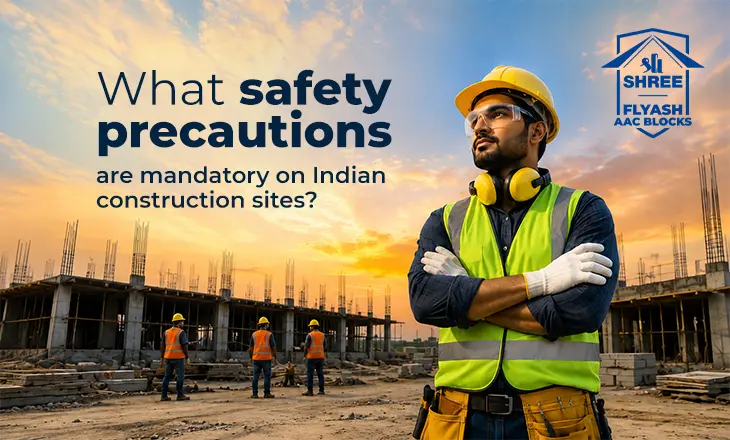
Construction sites are busy places where workers, materials, machines and project teams work together. Every day, site work may include excavation, lifting, scaffolding, masonry, electrical work, welding, storage, transport and finishing. Because so many activities happen at the same time, safety precautions must be planned carefully at every stage.
In India, construction site safety is not only a good practice. Several safety measures are required under Indian laws, rules, building codes and Indian Standards. These guidelines help protect workers, reduce accidents, improve site discipline and support smoother project completion. When construction building blocks such as fly ash AAC blocks are used, safety planning should also include proper cutting, handling, stacking and lifting practices.
Common Safety Risks on Construction Sites
Some of the most common risks include falls from height, falling materials, unsafe scaffolding, electrical hazards, fire risks, poor material storage, excavation collapse and vehicle movement.
For example, falling tools, steel rods, bricks or construction building blocks can injure workers below. Similarly, poorly stacked blocks or cement bags can collapse and create serious movement hazards. That is why safety precautions in construction site planning must cover not only worker protection, but also material handling, storage and movement.
Personal Protective Equipment Is Mandatory
Personal Protective Equipment, or PPE, is one of the most basic safety requirements on a construction site. Under the Building and Other Construction Workers Central Rules, 1998, employers are required to provide suitable protection to workers depending on the risks involved.
Safety helmets protect workers from falling objects such as tools, bricks, blocks or debris. Safety shoes protect the feet from heavy materials, sharp objects, falling blocks and wet working conditions. Gloves help prevent cuts and injuries while handling steel, tools, sharp materials and construction building blocks. Eye protection is especially important during welding, cutting, chipping and grinding. It is also useful when fly ash AAC blocks are cut to fit customised spaces, as dust or small particles may enter the eyes.
High-visibility jackets are important in areas where trucks, cranes, loaders and other machines move frequently. PPE should be provided by the employer and used properly by workers. However, PPE alone is not enough. It must be supported by supervision, training, barricading, housekeeping and safe work methods.
Scaffolding, Ladders and Fall Protection Must Be Safe
Falls are among the most serious risks on construction sites, especially when workers are using scaffolds, ladders, slabs, roofs or open edges. Work at height should always begin with proper planning and inspection. Scaffolds must be erected correctly, checked regularly and used only within their approved load capacity.
The IS 3696-1:1987 Safety Code of Scaffolds and Ladders, Part 1: Scaffolds provides important guidance on the safe use of scaffolding at construction sites. As part of fall protection, scaffolds should have stable platforms, guardrails, toe boards and safe access points. Open edges, slab openings, lift shafts and roof openings should also be properly covered or barricaded.
Workers using ladders should place them on firm ground and avoid overreaching. For high-risk work at height, safety harnesses, lifelines and safety nets should be used wherever required. This is especially important when masonry work is happening on upper floors and materials are being moved or placed near edges.
Fire Safety and Emergency Preparedness Are Essential
Construction sites often contain flammable materials, fuel, packaging, wood, chemicals and temporary electrical systems. Welding and cutting work can also increase the chance of fire. This makes fire safety planning important from the beginning of the project.
Sites should have fire extinguishers, clear emergency exits, warning signs, evacuation routes and trained workers. Flammable materials should be stored away from ignition sources. Temporary electrical systems should also be checked regularly.
The National Building Code of India, Part 4: Fire and Life Safety gives guidance on fire prevention, life safety and fire protection. Fire-resistant materials can also support safer construction. For example, fly ash AAC blocks can help reduce fire-related risks because of their fire-resistant properties. However, using fire-resistant construction building blocks does not replace the need for proper fire extinguishers, emergency exits, alarms and fire safety training at the site.
Materials Must Be Stored and Handled Properly
Unsafe storage is a common cause of accidents on construction sites. Materials such as cement bags, steel, pipes, tiles, fly ash AAC blocks and other components should be stacked in a stable, organised and easily accessible manner. They should not block walkways, emergency exits or active working areas, as this can create movement hazards and delay emergency response.
For construction building blocks such as fly ash AAC blocks, proper stacking is especially important to prevent collapse, breakage, damage and wastage. Heavy materials should not be stored near open edges or placed on platforms that cannot carry their weight. Wherever possible, lifting equipment, cranes, trolleys or other handling tools should be used to move materials safely instead of relying on unsafe manual handling.
For high-rise construction, fly ash AAC blocks should be placed on sturdy platforms or pallets, properly secured and then lifted safely to the required construction floor. Loose or poorly balanced material should never be lifted, as it can fall and put workers at risk.
The IS 4082:1996 – Stacking and Storage of Construction Materials and Components at Site: Recommendations provides guidance on how construction materials should be stored safely at project sites.
Excavation Work Must Be Planned Carefully
Excavation work needs careful planning because trenches and pits can become unsafe if the soil collapses, water enters the area or heavy machinery moves too close to the edge. Before work begins, excavation areas should be inspected properly to check soil stability, access points, nearby structures and possible water accumulation.
For deeper excavations, additional safety measures such as shoring, barricading, warning signs and safe entry and exit points may be required. Workers should not enter unsupported trenches if there is a risk of collapse. Excavated soil should also be kept at a safe distance from the edge, and the movement of vehicles or machinery near excavation zones should be controlled.
The IS 3764:1992 – Excavation Work: Code of Safety provides guidance on safe practices to be followed during excavation work at construction sites.
The main law for construction workers in India is the Building and Other Construction Workers (Regulation of Employment and Conditions of Service) Act, 1996. It applies to establishments employing 10 or more building workers and focuses on worker safety, health and welfare.
The BOCW Central Rules, 1998 provide more detailed safety requirements. These include emergency action plans, protection from falling objects, PPE, electrical safety, vehicle movement, stacking of materials, debris disposal, excavation and tunnelling safety.
The Occupational Safety, Health and Working Conditions Code, 2020 is another important framework. It consolidates rules related to occupational safety, health and working conditions for workers.
| Safety Area | What to Check |
| PPE | Helmets, gloves, safety shoes, jackets and eye protection are available |
| Material handling | Fly ash AAC blocks and other materials are stacked safely |
| Scaffolding | Platforms, guardrails, toe boards and access points are checked |
| Fall protection | Open edges, lift shafts and slab openings are covered or barricaded |
| Fire safety | Fire extinguishers, exits and evacuation routes are clearly available |
| Excavation | Trenches are inspected, supported and barricaded where needed |
| Electrical work | Temporary wiring, earthing and wet-area risks are checked |
| Lifting work | Blocks and other materials are secured before crane or hoist movement |
| Housekeeping | Walkways, exits and work zones are kept clear |
| Worker briefing | Daily toolbox talks are conducted before work begins |
How Teams Can Work Together to Reduce Safety Risks
Safety improves when every team works together. The project owner should set clear safety expectations from the beginning. The contractor should provide PPE, training, supervision and safe work methods. Site engineers should plan work sequences so that different activities do not create risks for each other.
For example, if masonry teams are working with fly ash AAC blocks on upper floors, lifting teams must ensure that the blocks are properly secured before movement. Electrical and plumbing teams should coordinate with masonry teams so that cutting and chasing work is planned safely. Procurement teams should buy quality materials, safe lifting accessories and proper cutting tools. The safety officer should inspect the site regularly and report unsafe practices.
Daily toolbox talks can help supervisors explain the day’s work, expected risks and required precautions before work begins.
Construction safety is a shared responsibility. The employer, principal employer and contractor have the main responsibility to provide safe working conditions. Site supervisors and safety officers must make sure safety rules are followed every day. Workers are responsible for using PPE, following safety instructions and reporting unsafe conditions.
Material suppliers also play a role by providing quality construction building blocks and sharing basic handling and storage guidance wherever needed.