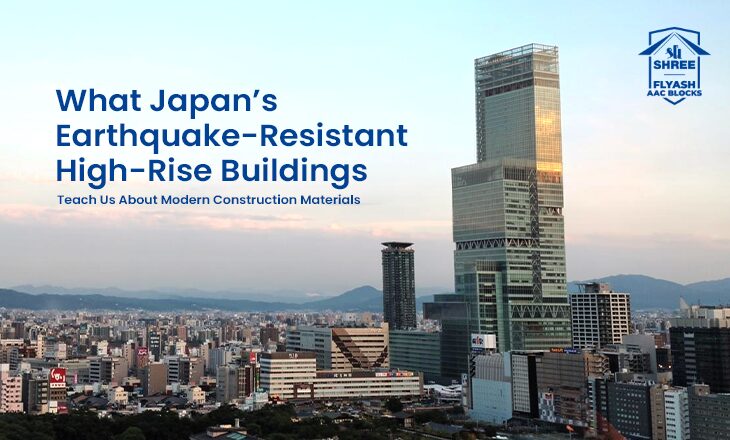
In Japan, a 7-8.0-magnitude earthquake shakes the ground, but modern high-rises sway gently rather than crumble. How do they do it? Japan, one of the most earthquake-prone countries in the world, has transformed seismic risk into a design opportunity, creating high-rise buildings that are both resilient and innovative.
For construction professionals and material suppliers in India, Japan’s approach offers valuable lessons on combining structural design with advanced, lightweight materials to build safer, more efficient high-rises.
Why Earthquake Resistance Matters in High-Rises
Earthquakes are a unique challenge for tall buildings. As the height of a structure increases, so do the inertial forces during seismic events. Heavier buildings are at higher risk of structural damage, as well as non-structural damage like falling walls and partitions.
Japan’s philosophy focuses on controlled movement instead of rigidity. Buildings are designed to absorb seismic energy, sway safely, and recover without catastrophic damage. This approach influences both structural systems and the materials used in construction.
Japanese High-Rise Design Strategies
Source: civildigital.com
Base Isolation Systems
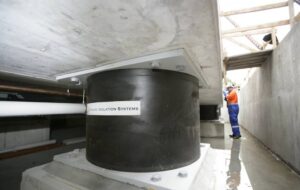
Many Japanese buildings use base isolation, a system that decouples the building from ground motion. This reduces the seismic energy transmitted to the structure, keeping occupants safer while significantly minimising damage.
Source: taxonomy.openquake.org
Energy-Dissipating Devices
High-rises often incorporate tuned mass dampers and supplemental damping systems. These devices reduce sway, improving stability & comfort during earthquakes.
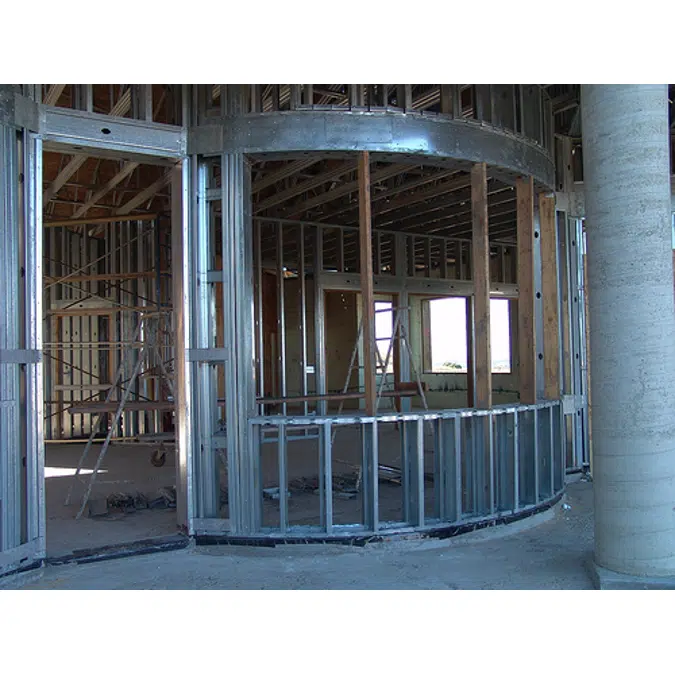
Source: www.bimobject.com
Flexible Structural Frames
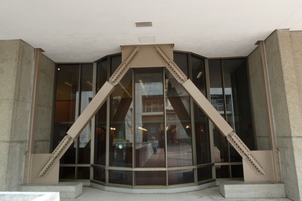
Steel and reinforced concrete frames are engineered to respond predictably under stress. Controlled flexibility ensures that damage is manageable and repairable.
Materials Matter: Choosing the Right Systems for Seismic Performance
While structural design plays a critical role in earthquake resistance, the choice of materials used in a building’s non-structural components can significantly influence its overall performance during seismic events.
In high-rise construction, materials are not just selected for strength—they are chosen for how they behave under stress, how much load they add to the structure, and how safely they respond to movement.
Modern construction practices increasingly rely on a mix of advanced material systems, each serving a specific purpose:
- Engineered panels: Designed for precision and speed, these systems reduce on-site load and ensure consistent quality
- Drywall and gypsum partitions: Lightweight and flexible, allowing structures to move without significant cracking
- Precast and modular components: Manufactured off-site for better control, reducing structural weight and improving installation efficiency
- Lightweight masonry solutions: Offering a balance between solidity, durability, and reduced density
The common goal across these materials is clear—to reduce overall building mass while improving safety and adaptability during seismic activity.
Heavier, rigid materials can increase stress on the structure and pose risks such as cracking or falling debris. In contrast, lighter and more adaptable systems help minimise these risks, making them more suitable for modern high-rise environments.
Where Lightweight Masonry Fits In
Within this broader material landscape, lightweight masonry continues to play an important role—especially in applications where durability and structural compatibility are key.
Solutions like AAC blocks are widely used as part of this category due to their ability to combine reduced weight with reliable performance.
- Lower density helps in reducing seismic forces acting on the structure
- Uniform composition supports consistent construction quality
- Good fire resistance and durability enhance long-term safety
- Use of industrial by-products supports more sustainable construction practices
Because of these advantages, Autoclaved Aerated Concrete Blocks are commonly used for infill walls and partitions in high-rise buildings. When used alongside other modern systems, they contribute to a more balanced, efficient, and resilient construction approach.
Bringing Japanese Principles to India
India is witnessing rapid urbanisation, with cities like Delhi NCR, Noida and Gurgaon seeing a steady increase in high-rise development. The lessons from Japan are directly applicable:
- Reduce building mass: Use lightweight AAC blocks and flyash-based masonry.
- Design for controlled movement: Focus on flexibility and predictable deformation.
- Prioritise safety and efficiency: Choose high-performance materials that meet Indian seismic standards (IS 1893).
By combining modern design techniques with Shree Flyash AAC blocks, builders can now create high-rises that are safer, more cost-effective and highly sustainable.
Conclusion
Japan’s earthquake-resistant high-rises show that seismic risk doesn’t have to limit architectural ambition. Through smart structural design, strict regulations, and performance-driven materials, high-rise construction can be both resilient and innovative.
For builders in India, adopting lightweight masonry systems like AAC blocks is a practical way to enhance safety, efficiency and sustainability in urban development. Thus, bringing a piece of Japan’s engineering excellence to your local construction practices.