Fly ash AAC blocks are widely used in construction because they are lightweight, easy to handle and suitable for faster masonry work. They can also be cut more easily than other conventional construction building blocks like Red Bricks.
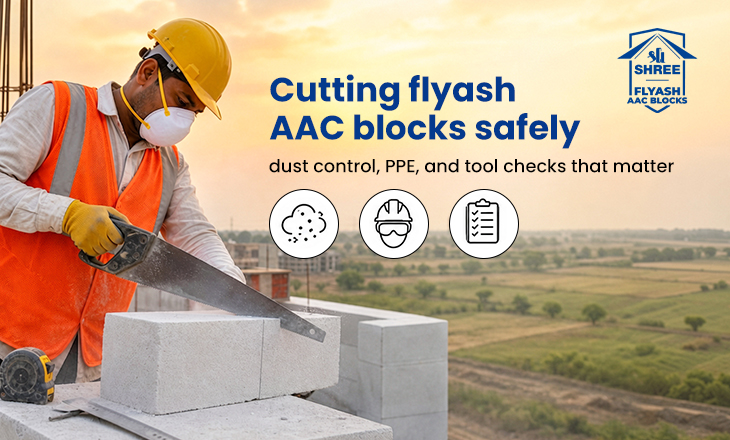
Cutting fly ash AAC blocks can create fine dust, flying particles, noise, uneven offcuts and handling risks. If the work is done without planning, it can affect worker health, site cleanliness, cutting accuracy and overall productivity. That is why dust control, PPE and proper cutting tools and checks must be part of the site process.
For builders sourcing from reliable fly ash aac block manufacturers in Gurgaon, safety should begin before the blocks reach the masonry stage. The site team should know how the material will be cut, where cutting will happen, which workers will operate the tools and how dust will be controlled.
Why Cutting Fly Ash AAC Blocks Needs Safety Planning
Fly ash AAC blocks are easier to cut because of their cellular structure. This is useful for fitting blocks around corners, beams, service lines, doors, windows and customised wall spaces. However, frequent cutting also creates dust and offcuts. If workers cut blocks randomly across the site, dust can spread to nearby work areas, also usable pieces may get wasted which leads to higher costs.
A safer approach is to plan cutting before masonry begins. Workers should know which blocks need to be cut, what size is required and where the cut pieces will be used. This reduces repeated cutting, unnecessary breakage and clutter.
| Cutting Hazards | What Can Happen |
| Fine dust | Workers may inhale dust and face poor visibility |
| Flying particles | Eyes and face may be injured during cutting |
| Poor tool condition | Uneven cuts, vibration or tool accidents may occur |
| Scattered offcuts | Material wastage may increase |
| Unplanned cutting | More dust, more rework and poor site organisation |
| Unsafe electrical use | Wet cutting near exposed wires can create shock risk |
1. Create a Dedicated Cutting Zone
One of the simplest ways to improve safety is to create a dedicated cutting zone. Instead of allowing workers to cut fly ash AAC blocks anywhere on the site, a specific area should be earmarked for cutting.
This area should be away from main walkways, material movement paths and other workers. It should have a stable cutting platform so that blocks do not move while being cut. If wet cutting is used, electrical cables and connections should be kept away from water exposure.
A dedicated cutting zone also makes cleaning easier. Dust can be controlled in one place instead of spreading across the site.
| Site Practice | Why It Matters |
| Fixed cutting area | Prevents dust from spreading across the site |
| Away from walkways | Reduces exposure for other workers |
| Use a stable platform | Improves cutting accuracy and reduces slips |
| Keep cables safely | Reduces electrical risk during wet cutting |
| Store offcuts separately | Helps reuse smaller pieces later |
| Clean the area regularly | Prevents dust and debris build-up |
2. Control Dust at the Source
Dust is one of the biggest concerns while cutting fly ash AAC blocks. Fine dust can affect breathing, irritate the eyes and reduce visibility. On busy Indian construction sites, dust can also spread quickly because multiple teams may be working close to each other.
Wet cutting or controlled water spray can help reduce airborne dust. The cutting surface should be dampened without creating unsafe water accumulation around electrical tools. Where possible, the area should be enclosed with a dust extraction system to capture particles before they spread.
Cleaning methods also matter. Wet cleaning or vacuum cleaning is a better option wherever practical.
| Dust Control Method | How It Helps |
| Wet cutting | Reduces dust released during cutting |
| Water spray | Keeps the cutting area damp |
| Dust extraction | Captures dust near the source |
| Wet cleaning | Reduces dust from becoming airborne again |
| Barricading | Keeps non-cutting workers away from the dust zone |
3. Use the Right PPE
Personal Protective Equipment, or PPE, is essential when cutting fly ash AAC blocks. A cloth mask is not enough for cutting work, workers should use construction-grade respiratory protection suitable for fine dust exposure.
Safety goggles are also important because dust and small particles can enter the eyes while cutting. Gloves help workers grip blocks and tools properly. Safety shoes protect the feet from falling blocks, tools or offcuts. Ear protection may be needed when power tools are used for long periods.
Contractors should make PPE part of daily site discipline, not an optional practice.
4. Check Tools Before Cutting
Tool inspection is important, a damaged blade, loose guard or faulty cable can put workers at risk. It can also lead to uneven cutting and higher material wastage.
Before work begins, the supervisor or trained operator should check whether the cutting tool is suitable for fly ash AAC blocks. The blade should be sharp, clean and free from visible cracks. Safety guards should be fitted properly. In case it’s a motorised / electric tool, power cables should not have exposed wires, loose joints or damaged insulation.
The tool should be tested before regular cutting begins. If the machine vibrates excessively, makes unusual noise or does not start and stop smoothly, it should not be used until checked.
5. Follow Safe Cutting Practices
Safe cutting is not only about tools. Workers should place the block firmly before cutting. They should avoid holding the block in an unstable position or cutting while the block is placed loosely on uneven ground.
Measurements should be marked clearly before cutting. This reduces repeated adjustments and prevents wastage. Workers should avoid forcing the blade through the block. A steady cutting motion is safer and gives a cleaner finish.
Only authorised workers should operate cutting tools. Helpers should keep a safe distance unless they are directly assisting and wearing proper PPE.
6. Manage Offcuts and Keep the Site Clean
After cutting, usable offcuts should not be thrown away immediately. Smaller pieces of fly ash AAC blocks can often be used near wall ends, service openings, internal partitions or adjustment areas. This helps reduce waste.
However, offcuts should be stored properly. If they are left scattered, they can create trip hazards and make the site look disorganised. The site team should separate usable offcuts from waste and keep them in a marked area.
Clean cutting zones also improve safety. Dust, broken pieces and unused materials should be cleared at regular intervals so that workers can move safely.
Common Mistakes to Avoid
| Mistake | Why It Is a Problem |
| Cutting blocks anywhere on site | Spreads dust and creates clutter |
| Dry cutting without control | Increases dust exposure |
| Using damaged blades | Causes uneven cuts and tool risk |
| Not using goggles | Dust and particles can injure the eyes |
| Sweeping dry dust | Pushes dust back into the air |
| Leaving offcuts scattered | Creates trip hazards and wastage |
| Cutting near other workers | Exposes others to dust and noise |
| Ignoring tool guards | Increases accident risk |
Indian Site Safety Context
In India, cutting work should not be treated as an informal on-site activity. Site teams are expected to provide safe working conditions, suitable PPE, proper supervision and safe methods of work. This is especially important on sites where multiple trades work at the same time.
The Building and Other Construction Workers framework focuses on the safety, health and welfare of construction workers. The Occupational Safety, Health and Working Conditions framework also reinforces the need for safer working conditions. For fly ash AAC blocks, site teams should also check that the supplied material matches the approved project specification before cutting and installation begin.